Crowding of the teeth
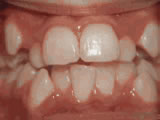 Before
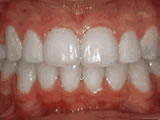 After
AfterCrowding can make it difficult to brush and floss effectively, which can lead to an increased risk of cavities and gum disease.
Excessive spacing of teeth
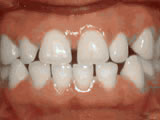 Before
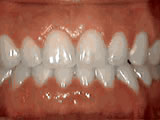 After
AfterExcessive spacing of the teeth can cause food impactions, and in some cases, can make periodontal disease more common.
Excessive overbite
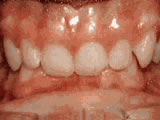 Before
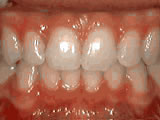 After
AfterAn excessive overbite, also referred to as a deep bite, happens due to misalignment – the upper teeth have overerupted. Often, the patient is not able to use their front teeth to bite, which can cause damage to the back teeth. In severe cases, like the one shown, the teeth can bite into the gum tissue, which can cause pain and tissue damage.
Overjet - Protruding front teeth
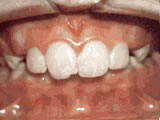 Before
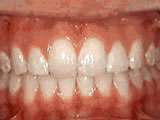 After
AfterAn overjet (where the front teeth protrude out) is very commonly combined with excessive overbite. Where the overbite is vertical, the overjet is horizontal – the upper arch is too far forward and the front teeth stick out. Injury to the front teeth from a fall is a common risk for a patient with an overjet.
Underbite
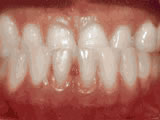 Before
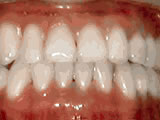 After
AfterAn underbite occurs when the lower arch is farther forward relative to the upper arch than it should be. This can cause difficulty chewing and biting, excessive wear, damage to the gums, and jaw pain. Treatment ranges from traditional orthodontics to orthognathic surgery, in very severe cases.
Open bite - Front teeth don't touch
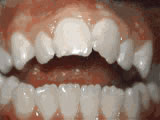 Before
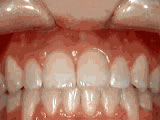 After
AfterAn open bite is often caused by thumb/finger sucking or pacifier use. It can interfere with speech and pronunciation, and over time cause excessive wear on the back teeth.
Missing, peg, or small lateral incisors
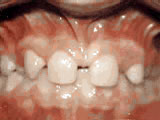 Before
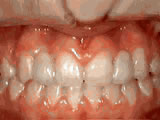 After
AfterJust under four percent of the population is missing lateral incisors. Another four percent of the population has peg or small lateral incisors. There are several different ways to manage missing lateral incisors or peg/small lateral incisors.